Derek Condit – Founder of the Shungite Beehives
In 2017, Derek embarked on an innovative and pioneering endeavor known as the Shungite Beehive Project, merging his extensive knowledge of treatment-free beekeeping with the distinctive energetic properties of Shungite. His goal was to explore and implement natural methods to enhance hive resilience, support pollinator health, and counteract environmental stressors affecting bee populations worldwide. Recognizing the urgent need to address colony decline, Derek integrated Shungite into hive structures as a potential solution to mitigate the effects of non-biocompatible frequencies.
Shungite, a rare carbon-based mineral known for its high conductivity and unique molecular structure, has long been studied for its ability to interact with various energy fields. It is believed to neutralize or harmonize disruptive frequencies emitted by modern technology, such as cell phones, cell towers, Wi-Fi routers, and radio antennas, which have been linked to stress responses in bees and other wildlife. By incorporating Shungite strategically within the hive environment, Derek sought to create a protective energetic barrier that could help reduce electromagnetic stressors and promote a more harmonious internal environment for the bees.
His approach included:
- Placing Shungite-infused paint on the exterior of the beehives to establish a protective field around the colony.
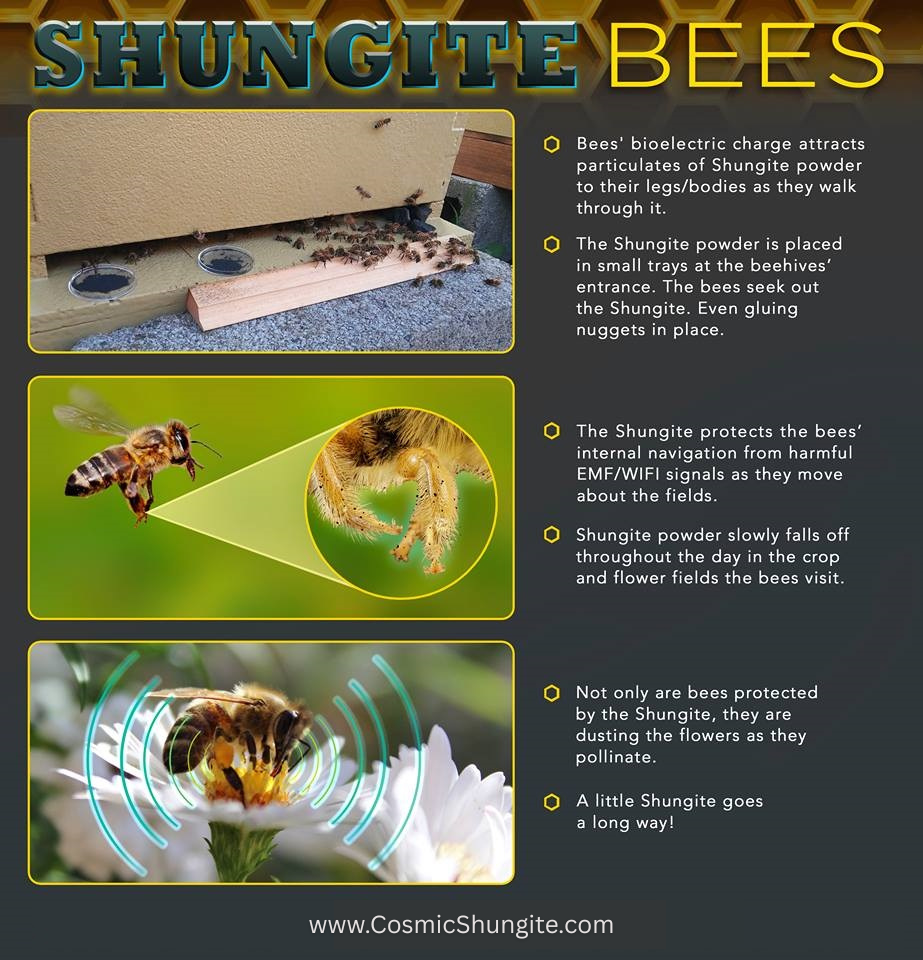
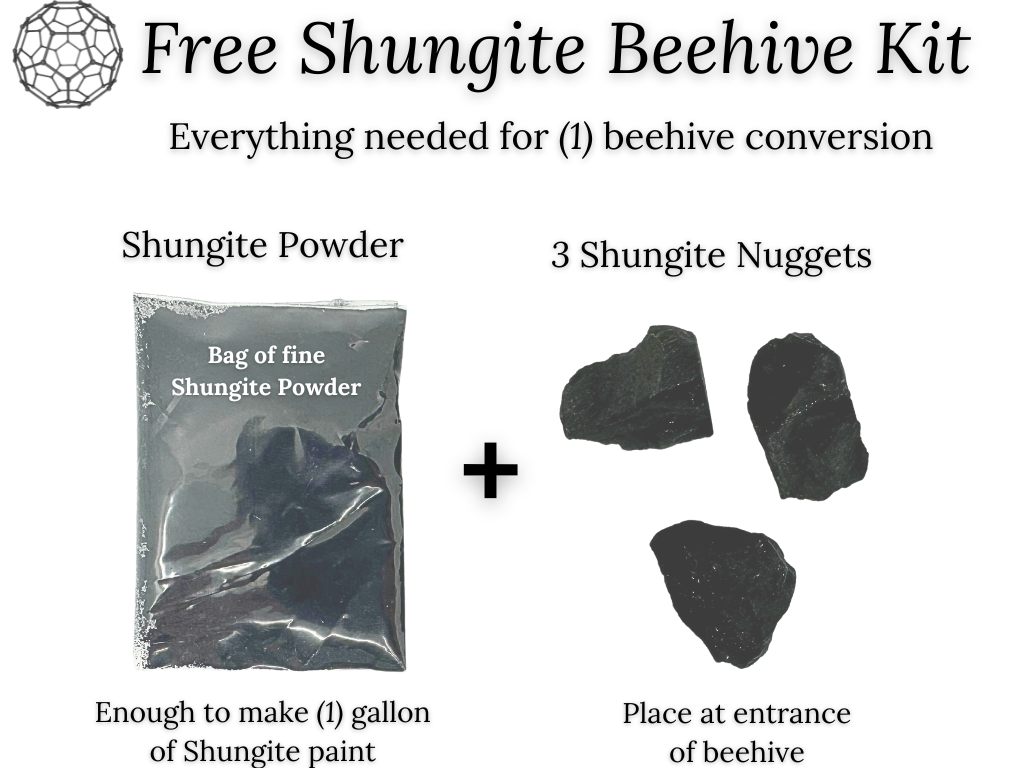
- Embedding Shungite pieces at the hive entrance to serve as a grounding mechanism, potentially helping the bees discharge built-up energetic interference.
- Spreading Shungite nuggets or Shungite powder under beehives to help dissipate ‘stray voltage or stray currents’
- Observing behavioral changes and hive health improvements in colonies exposed to this method.
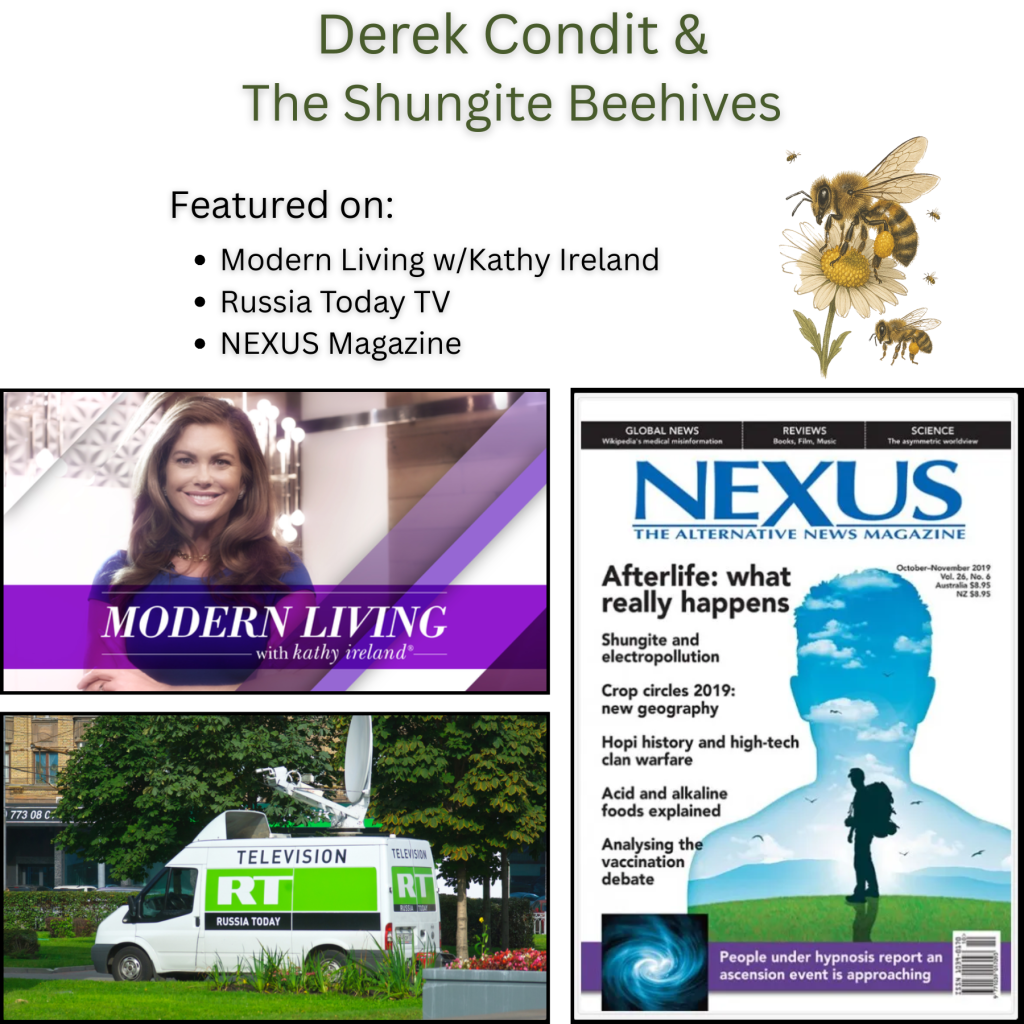
Derek has openly shared his experiences and findings through videos, photographs, interviews, and podcasts, reaching a global audience of beekeepers, researchers, and environmentally conscious individuals. His work has contributed to an ongoing conversation about the role of energetic influences on pollinator health and has inspired others to explore alternative, holistic approaches to supporting bees in an era of increasing technological interference.
By integrating Shungite with natural, treatment-free beekeeping practices, Derek continues to advocate for sustainable and innovative solutions to help safeguard one of the planet’s most vital pollinators.
Transforming Any Beehive into a Shungite Beehive:
Any type of beehive can be converted into a Shungite Beehive, incorporating the protective and grounding properties of Shungite to create an energetically harmonious environment for bees. For this guide, we will focus on the Langstroth beehive setup, but the principles can be adapted for other hive designs.
While not all steps are required in every case, we recommend following these guidelines as closely as possible to achieve the most optimal results. If you are working with a previously used beehive, you can apply Shungite-infused paint over existing coatings, provided they are non-toxic.
Step 1: Selecting a Hive & Preparing the Surface
- Begin with a new beehive that has not been treated with chemical sealants, synthetic paints, or pesticides. This ensures the bees are not exposed to harmful residues.
- If using a pre-owned hive, lightly sand the exterior to remove loose paint or contaminants before applying Shungite Paint.
Step 2: Applying Shungite Paint to the Exterior
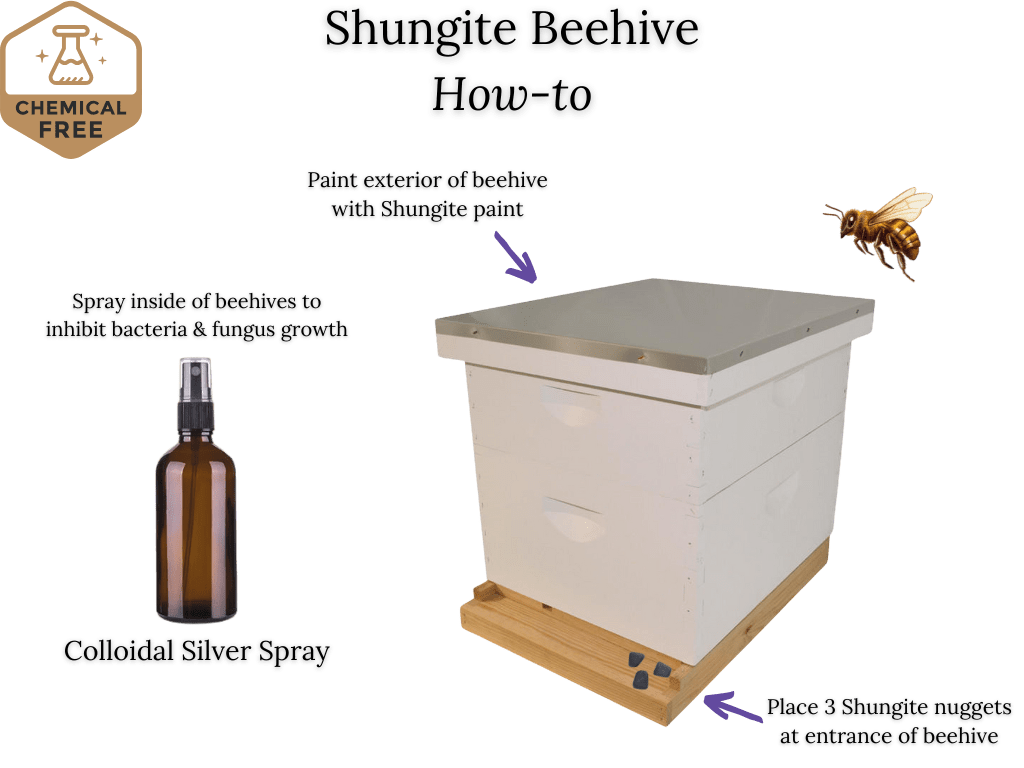
- Coat the entire exterior surface of the beehive with Shungite-infused paint (recipe provided below).
- Shungite’s high carbon content and fullerenes allow it to interact with various energy fields, potentially helping mitigate the impact of harmful electromagnetic frequencies from sources like cell towers, Wi-Fi routers, and radio signals.
- Allow the first coat to dry completely before applying an additional layer for enhanced protection and longevity.
Step 3: Treating the Hive Interior with Colloidal Silver
- Before introducing bees, generously spray the inside of all hive boxes with colloidal silver (15ppm or higher).
- Allow the hive components to dry completely, and repeat if a more thorough saturation is desired.
- The presence of silver particles inside the hive may help inhibit harmful bacterial and fungal growth, including:
- Chalkbrood disease
- Stonebrood disease
- American foulbrood
- European foulbrood
Colloidal silver has been recognized for its antimicrobial properties, supporting the hive’s overall health by reducing the likelihood of pathogenic outbreaks that could weaken or destroy a colony.
Additional Enhancements (Optional but Recommended)
- Embedding Shungite at the Hive Entrance
- Placing Shungite stones at the hive entrance may act as a grounding mechanism, helping bees discharge built-up static or disruptive energy.
- Observations suggest that bees frequently interact with Shungite, which could indicate an energetic affinity beneficial to their well-being.
- Integrating Shungite Powder into the Inner Hive Environment
- Lightly dusting Shungite powder inside corners or crevices of the hive boxes may further enhance the hive’s protective energy field.
- Ensure any application does not interfere with hive ventilation or bees’ natural movement patterns.
By following these steps, beekeepers can holistically enhance their hives with the grounding, protective, and antimicrobial properties of Shungite and colloidal silver, creating an environment that fosters stronger, healthier colonies in a world of increasing environmental stressors.
Benefits of Using Amadou Mushrooms with Beehives:
Amadou mushrooms (Fomes fomentarius) have a long history of use in traditional medicine and practical applications. Recent interest in natural beekeeping has highlighted their potential benefits for honeybee health and hive resilience. Below are the key ways amadou mushrooms can support beekeeping practices:
1. Natural Antimicrobial Properties
Amadou mushrooms contain bioactive compounds with antifungal, antibacterial, and antiviral properties. When introduced to hives, these compounds can help reduce pathogenic pressures, supporting overall hive immunity without relying on synthetic treatments.
2. Immune System Support for Bees
Research suggests that fungi like amadou can enhance bees’ natural detoxification and immune systems. Bees exposed to mushroom extracts often show improved resilience against viruses such as deformed wing virus (DWV) and chronic bee paralysis virus (CBPV).
3. Reduction of Harmful Pathogens
Amadou has shown potential in reducing the impact of harmful fungi and parasites that affect colonies. This makes it a promising ally in addressing common beekeeping challenges such as Nosema and other microbial threats.
4. Non-Chemical Alternative
For natural and treatment-free beekeepers, amadou mushrooms provide a sustainable alternative to antibiotics or chemical mite treatments. They support a philosophy of working with nature rather than imposing synthetic interventions.
5. Synergy with Hive Ecology
Integrating amadou into hive environments encourages a more symbiotic relationship between bees and fungi. In the wild, bees naturally encounter and interact with fungi in tree cavities and forest ecosystems. Introducing amadou mushrooms into managed hives helps mimic this natural balance.
6. Long-Term Hive Resilience
By strengthening bees’ immune responses and reducing disease stressors, amadou mushrooms may contribute to increased colony survival rates and greater long-term resilience in the face of environmental pressures.
Practical Applications for Beekeepers:
- Mushroom Extract Sprays
Prepare a water-based amadou extract and spray lightly on hive entrances, landing boards, or internal frames. This allows bees to ingest and share the beneficial compounds throughout the colony. - Feed Additive
Add small amounts of amadou extract to sugar water or other liquid feed supplements during stress periods, such as early spring or late fall, to support immunity. - Solid Mushroom Placement
Place pieces of amadou mushroom directly inside the hive near the brood chamber. Bees will interact with and nibble on the mushroom material as needed. - Synergistic Use with Other Mushrooms
Combine amadou with other beneficial fungi, such as reishi or chaga, to create a broader spectrum of immune and antimicrobial support. - Seasonal Support
Offer amadou-based treatments during high-stress times of the year—after honey harvests, before wintering, or during heavy mite/virus seasons—to bolster resilience.
Preparing Amadou Extracts:
- Collecting & Cleaning
- Harvest amadou mushrooms (Fomes fomentarius) from birch or beech trees.
- Brush off dirt and debris, and trim away any woody or overly hard outer layers.
- Drying
- Slice the mushroom into thin strips or chunks.
- Allow to air dry or use a dehydrator until fully hardened.
- Water Extraction (Decoction)
- Place dried pieces into a pot with clean water.
- Simmer gently for 1–2 hours, avoiding a hard boil.
- Strain and allow the liquid to cool. This creates a concentrated tea-like extract.
- Alcohol Tincture (Optional for Storage)
- Place dried pieces in a glass jar.
- Cover with 40% (80 proof) alcohol such as vodka.
- Let steep for 4–6 weeks, shaking occasionally.
- Strain before use. This tincture can be diluted in water before offering to bees.
- Application
- Use water decoction directly in sprays or feeders.
- For alcohol tincture, dilute several drops into sugar water or spray solutions to avoid excessive alcohol exposure.
⭐In summary: Amadou mushrooms act as a natural ally for honeybees, providing antimicrobial protection, immune support, and ecological balance. Practical applications such as extracts, feed additives, and direct placement give beekeepers easy ways to integrate amadou into hive care. With proper preparation of extracts, beekeepers can ensure safe and effective use that aligns with natural and treatment-free practices.
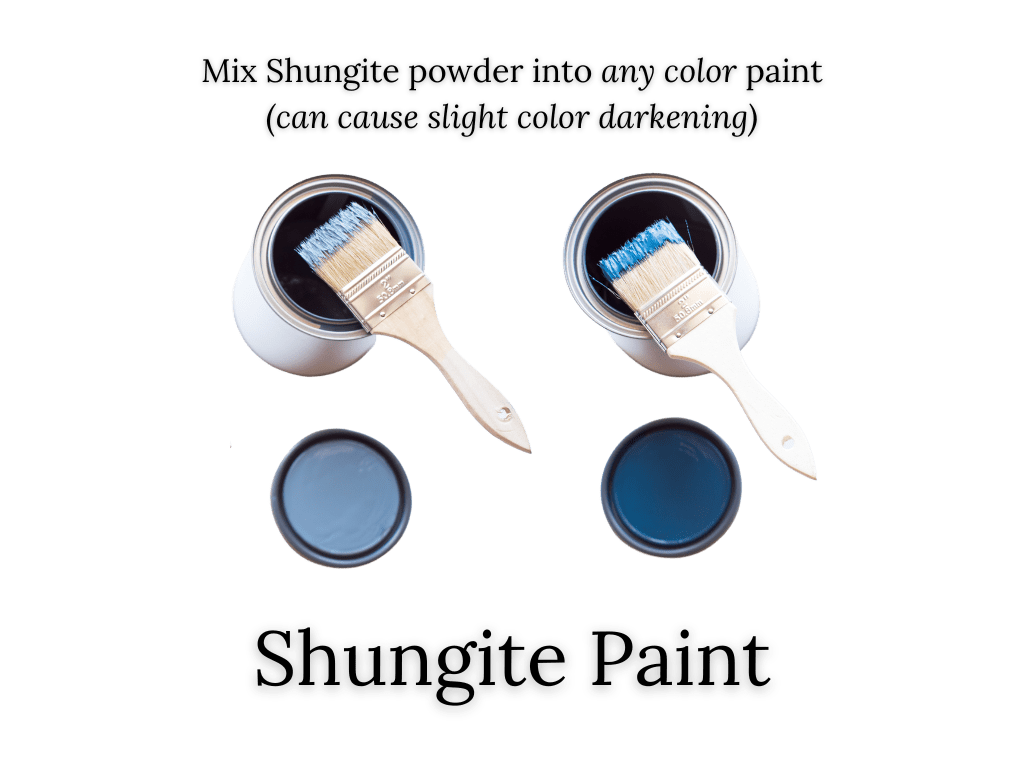
Applying Shungite Paint to Your Beehive:
- Paint the entire exterior of the beehive, allowing it to dry completely before adding additional coats.
- Ensure proper drying time before placing bees inside to avoid exposure to any residual fumes.
- Introducing Bees to the Hive
- You can populate your hive using one of the following methods:
- Transferring bees from an existing hive
- Introducing a package or nuc
- Capturing a wild swarm
- You can populate your hive using one of the following methods:
- Adding Grounding Shungite Nuggets
- Place three medium-sized Shungite nuggets (at least 2 inches long) in one corner of the hive entrance.
- These Shungite stones act as grounding conductors, allowing bees to discharge built-up electromagnetic energy before entering or exiting the hive.
- Over time, you may observe bees naturally gathering around these stones, indicating their energetic benefits.
- Ensuring Chemical-Free Frames
- To maintain a non-toxic and natural hive environment, regularly inspect the hive frames.
- By the end of the honey season, replace any contaminated frames with new, untreated ones.
- Enhancing Antimicrobial Protection with Colloidal Silver
- Spray the interior of the hive with colloidal silver (15ppm or higher) to inhibit bacterial and fungal growth.
- Allow the hive components to dry completely before placing bees inside.
(video shows the first 2min honeybees have ever been introduced to Shungite)
Click-Here to Learn more about Stray Ground Currents and how they can affect beehives, animals & people.
Shungite Beehives and Ground Currents: A Study of Interaction
Introduction
Shungite beehives are gaining attention in apiculture and holistic practices due to the unique electromagnetic and energetic properties of Shungite. This document explores the interaction between ground currents—also known as stray currents—and Shungite-based hive environments.
What Are Ground (Stray) Currents?
Ground currents refer to unintended electrical currents that travel through the earth or conductive surfaces, often due to faulty electrical grounding, utility imbalances, or stray voltage from power systems. These currents can disrupt biological systems, including the sensitive navigation and communication mechanisms of honeybees.
Impact of Ground Currents on Beehives
Research and anecdotal evidence suggest that stray currents may:
- Disorient honeybee navigation, potentially contributing to colony collapse
- Increase stress levels and aggressive behavior in bees
- Interfere with hive productivity and queen health
Shungite as a Potential Mitigating Material
Shungite, especially Type I (Elite or Noble Shungite), is known for its high carbon content and fullerenes. It is believed to possess properties that:
- Shield or neutralize electromagnetic fields (EMFs)
- Ground excess electrical charge
- Modulate environmental energy
In the context of beekeeping:
- Shungite tiles or plates may be placed at the base of the hive to act as a grounding layer
- Shungite-coated beehives may dampen or deflect stray currents, creating a more stable biofield for the colony
Considerations and Practical Setup
- Hive Placement: Avoid placing hives near known sources of stray current (e.g., electrical substations, underground cables).
- Testing: Use voltmeters or earth ground testers to measure potential difference across the soil.
- Layering: Incorporate Shungite gravel or powder beneath and around the hive base, possibly mixed with conductive metals like copper for grounding synergy.
Scientific vs. Metaphysical Perspectives
While the EMF shielding capacity of Shungite has been studied to some extent, direct scientific evidence for its effect on bees is limited. However, practitioners and natural beekeepers report improved bee behavior, reduced mortality, and increased honey yields in Shungite hive systems.
Metaphysically, Shungite is considered a harmonizer and protector, supporting the vitality of living organisms. In this view, the mineral may help stabilize energetic anomalies caused by ground currents.
Conclusion
Integrating Shungite into beekeeping, particularly in areas affected by stray currents, is an emerging practice that bridges science, sustainability, and spirituality. While more research is needed to quantify the benefits, preliminary observations suggest that Shungite beehives may provide a more balanced and resilient environment for honeybee colonies.
Click-Here to view study: ‘Does enhanced electromagnetic radiation disturb honeybees’ behavior?
Abstract: Insects, and especially honeybees, are under major threat everywhere
around the globe. Current studies lack in the consideration of potential
effects which may directly affect other organisms or ecosystems, because
of the verPy limited attention which is usually received by the potential
adverse ecological effects of radiofrequency electromagnetic fields. Here, it
is hypothesized that planetary enhancement of electromagnetic radiation
produces a disturbing pollution for honeybees. In order to test this
hypothesis, a bi-directional wide frequency range microphone was placed
during the New Year’s Eve night 2019 in a honeybee hive, in order to detect
and analyze potential changes in the acoustic behaviour of the bees due to
increased phone induced RF- EMF radiation. It was observed that the
honeybees produced strong worker piping signals. Such signals are
typically produced shortly before takeoff of a swarm, or as the sign of a
disturbed colony. It is therefore hypothesized that planetary enhancement
of electromagnetic radiation produces a disturbing pollution for
honeybees, such as during the New Year’s Eve night. Evidence of proof of
such electromagnetic waves taking place at New Year’s Eve should be
investigated worldwide during forthcoming similar events based on a
global network of long term EM measurements.
View entire study:Click-Here (Published by: International Journal of Research)
How Shungite Beehives Protect Against EMFs & Colony Collapse Disorder (CCD)
Scientific studies suggest that electromagnetic frequencies (EMFs) from cell towers, Wi-Fi signals, and 5G networks can disrupt bee navigation, suppress immune function, and increase stress levels, leading to Colony Collapse Disorder (CCD).
A Shungite-coated beehive acts as a Faraday cage, reducing the penetration of harmful frequencies and offering bees a place to regenerate their energy fields. This allows them to recover from electromagnetic exposure overnight, leading to:
- Stronger immune systems
- Improved hive cohesion and stability
- Enhanced resilience against environmental stressors
By incorporating Shungite into your beekeeping practices, you provide your bees with a protective, energetically balanced home, helping preserve pollinator health in an increasingly technology-driven world.
Additional Shungite beekeeping information
We have no CCD (Colony Collapse Disorder) losses since introducing Shungite to the beehives, and no losses due to disease.
- We believe in treatment-free beekeeping (no chemicals used on beehives)
- No artificial feeding (we leave the bees more than enough honey so feeding isn’t necessary)
- Shungite Honey is kept 100% raw & unfiltered to retain the honey’s natural beneficial qualities!
What’s Shungite? Why use it on beehives?
Bees are incredibly sensitive to the energy frequencies in their surroundings, which allows them to be highly attuned to the vibrational patterns that exist in their environment. This heightened awareness enables them to navigate and respond to various energetic stimuli, such as Shungite. Everything on Earth has a specific vibration or frequency, and all living beings, including humans, animals, plants, and insects, have a vibration field that must be maintained at specific levels to remain healthy. The way molecules or atoms of all matter “spin” around one another is known as their frequency, which can be observed under a high-powered microscope.
NASA has been using frequency generators for decades to protect astronauts while they are away from the Earth’s natural frequency source. Astronauts’ physical condition deteriorated while in outer space, away from the Schumann Resonance (Earth’s frequency) and while being in the presence of the strong magnetic fields of the space shuttles. This problem was solved by introducing the “Schumann Simulator” into all space shuttles, a magnetic pulse generator broadcasting the Earth’s natural frequency.
However, modern technologies, such as computer monitors, laptops, TVs, radios, microwave ovens, Wi-Fi routers, smart meters, and cell phones, use electromagnetic waves in order to function. These frequencies are extremely detrimental to our natural vibrations as well as the bees’ vibrations. When the bees’ vibration field or frequency is disharmonious, their meridian clocks are disturbed, immunity is compromised, natural recovery and rejuvenation abilities are reduced, and overall wellness can decline. This makes the bees more susceptible to diseases and pests.
This is where Shungite comes in…
Shungite is a unique mineral that contains 98% carbon and is found in Karelia, Russia. Its atomic structure forms fullerenes, which are molecules made of 60 carbon atoms shaped like a soccer ball. These fullerenes have the ability to attenuate toxins and radiation in their environment by reversing the electromagnetic fields to a bio-compatible rotation. This property of Shungite can help bees regain their peak efficiency, as they are highly sensitive to the energy frequencies in their surroundings.
In 1991, Science magazine named fullerenes the “molecule of the year,” predicting that they would significantly impact scientific research in the years to come. Shungite has been used in medical treatments since the early 18th century, with Peter the Great setting up Russia’s first spa in Karelia to take advantage of the water purifying properties of the mineral. He also introduced its use for providing purified water to the Russian army, and modern testing has confirmed its antibacterial properties.
Russian doctors and scientists have had great success treating patients before and after surgery in rooms built with Shungite. These rooms greatly enhance the recovery and rehabilitation time for patients. Russian and Ukrainian research has also demonstrated that fullerene-rich Shungite can attenuate various forms of negative energy. At Shungite Energy, we are employing Shungite in similar ways to improve the health and overall well-being of bees.
Click-Here: Ways to help ‘Save the Bees’ without becoming a beekeeper.
Help Save the Bees without a beehive!
Helping Bees Without a Beehive: Simple Ways to Support Pollinators
You don’t need to keep a honeybee hive to make a significant impact on bee conservation. There are many simple and effective ways to support local pollinators in your own environment. By creating a bee-friendly space, you can help strengthen bee populations, enhance biodiversity, and contribute to a healthier ecosystem.
1. Provide a Bee Bath with Shungite for Clean, Energized Water
Bees require a safe and reliable water source to hydrate, regulate their hive temperature, and dilute stored honey. Since bees can travel up to 7 miles searching for water, providing one in your yard helps reduce their energy expenditure, allowing them to spend more time pollinating.
How to Set Up a Bee Bath:
- Use a shallow dish, birdbath, or even a large plant saucer as the water container.
- Place small Shungite nuggets, rocks, marbles, or corks inside to give bees a safe landing area.
- Add a Shungite nuggets to the water.
- Shungite is known for its purifying and energy-balancing properties and can help keep the water clean and free of harmful bacteria.
- Refill with fresh water daily, especially during hot weather.
The Impact:
If more people provide bee baths in their yards, bees won’t have to travel long distances for water. This means they can conserve energy and focus on collecting pollen and nectar, which helps improve local plant pollination and supports thriving ecosystems.
2. Install a Mason or Carpenter Bee House
Unlike honeybees, which live in large hives, Mason and Carpenter bees are solitary pollinators that already exist in most environments. These stingless bees are highly efficient pollinators, visiting more flowers per minute than honeybees, making them a vital resource for gardens and local flora.
How to Support Mason and Carpenter Bees:
- Install a Mason bee house on a fence, tree, or sunny wall.
- These houses mimic their natural nesting spots (small tunnels in wood or plant stems).
- Place it facing east or southeast so bees get morning sun exposure.
The Impact:
Since Mason and Carpenter bees are stingless and do not form aggressive colonies, they are an excellent way to boost pollination without the concerns of maintaining a honeybee hive. Supporting them encourages stronger fruit and vegetable yields, benefiting your garden and surrounding plant life.
3. Plant Bee-Friendly Flowers for Abundant Food Sources
One of the easiest ways to support bees is by providing plenty of accessible nectar and pollen sources throughout the growing season. Native wildflowers, dandelions, and clover flowers are all excellent choices for low-maintenance, high-benefit pollinator support.
How to Create a Bee-Friendly Landscape:
- Choose native flowers that bloom in different seasons to provide year-round food.
- Let dandelions and clover grow! These “weeds” are actually essential early-season food sources for bees.
- Avoid using pesticides and herbicides, as these chemicals harm bee populations.
- If space is limited, create a container garden with pollinator-friendly flowers such as lavender, sunflowers, echinacea, and bee balm.
The Impact:
By offering plentiful and easily accessible nectar sources, you are helping ensure that local bee populations stay strong. Increased pollination means healthier gardens, stronger plant biodiversity, and a more vibrant ecosystem for all wildlife.
Small Actions = Big Results
Even if you don’t keep bees, you can actively contribute to their survival by implementing just one or two of these practices. Providing a safe water source, shelter for solitary pollinators, and abundant flowers can significantly improve bee populations in your area, creating a ripple effect that supports agriculture, food production, and environmental balance.
By making small changes in your backyard, you’re helping protect one of the most vital species on the planet!
Click-Here: Scientific Studies & Research Regarding the harmful effects of EMF on honeybee populations.
Research clearly shows that bees are sensitive to electromagnetic fields.
Cucurachi, C., et al. “A review of the ecological effects of radiofrequency electromagnetic fields (RF-EMF).” Environment International, vol. 51, 2013, pp. 116–40.
- A review of 113 studies from original peer-reviewed publications. RF-EMF had a significant effect on birds, insects, other vertebrates, other organisms and plants in 70% of the studies. Development and reproduction of birds and insects are the most strongly affected endpoints.
Balmori, Alfonso. “Anthropogenic radiofrequency electromagnetic fields as an emerging threat to wildlife orientation.” Science of The Total Environment, vol. 518–519, 2015, pp. 58–60
- The growth of wireless telecommunication technologies causes increased electrosmog. Radio frequency fields in the MHz range disrupt insect and bird orientation.
- Radio frequency noise interferes with the primary process of magnetoreception. Existing guidelines do not adequately protect wildlife. Further research in this area is urgent.
Balmori, A. “Electrosmog and species conservation.” Science of the Total Environment, vol. 496, 2014, pp. 314-6.
- “Conclusion: At the present time, there are reasonable grounds for believing that microwave radiation constitutes an environmental and health hazard….Concerning the exposure to electromagnetic fields, the precautionary principle is needed and should be applied to protect species from environmental non-thermal effects (Zinelis, 2010). Controls must be introduced and technology rendered safe to the environment, since this new ubiquitous and invisible pollutant could deplete the efforts devoted to species conservation.”
“Cryptochromes are very badly affected by weak oscillating electromagnetic fields that are orders of magnitude weaker than the Earth’s steady magnetic field. This can disrupt both solar and magnetic navigation, which can account for colony collapse disorder in bees.”
—Dr. Andrew Goldsworth
Cammaerts, Marie-Claire. “Is electromagnetism one of the causes of the CCD? A work plan for testing this hypothesis.” Journal of Behavior, vol. 2, no. 1, 2017, pp. 1006.
- The decline of domestic bees all over the world is an important problem still not well understood by scientists and beekeepers, and far from being solved. Its reasons are numerous: among others, the use of pesticides and insecticides, the decrease of plant diversity, and bee’s parasites. Besides these threats, there is a potential adverse factor little considered: manmade electromagnetism.
- The present paper suggests two simple experimental protocols for bringing to the fore the potential adverse effect of electromagnetism on bees and to act consequently. The first one is the observation of bees’ avoidance of a wireless apparatus; the second one is the assessment of colonies’ strength and of the intensity of the electromagnetism field (EMF) surrounding them. If bees avoid a wireless apparatus, if hives in bad health are located in EMF of a rather high intensity, it can be presumed that bees are affected by manmade electromagnetism. This should enable searching for palliative measures.
Goldsworthy, Andrew. “The Birds, the Bees and Electromagnetic Pollution: How electromagnetic fields can disrupt both solar and magnetic bee navigation and reduce immunity to disease all in one go.” 2009.
- Many of our birds are disappearing mysteriously from the urban environment and our bees are now under serious threat. There is increasing evidence that at least some of this is due to electromagnetic pollution such as that from cell towers, cell phones, DECT cordless phones and Wifi. It appears capable of interfering with their navigation systems and also their circadian rhythms, which in turn reduces their resistance to disease. The most probable reason is that these animals use a group of magnetically-sensitive substances called cryptochromes for magnetic and solar navigation and also to control the activity of their immune systems.
Guerra, Patrick A., Robert J. Gegear, and Steven M. Reppert. “A magnetic compass aids monarch butterfly migration.” Nature Communications, vol. 5, no. 4164, 2014.
- “Here we use flight simulator studies to show that migrants indeed possess an inclination magnetic compass to help direct their flight equator ward in the fall. Another vulnerability to now consider is the potential disruption of the magnetic compass in monarchs by human-induced electromagnetic noise, which can apparently disrupt geomagnetic orientation in a migratory bird.”
Kumar, Neelima R., Sonika Sangwan, and Pooja Badotra. “Exposure to cell phone radiations produces biochemical changes in worker honey bees.” Toxicol Int., 18, no. 1, 2011, pp. 70–2.
- The present study was carried out to find the effect of cell phone radiations on various biomolecules in the adult workers of Apis mellifera L. The results of the treated adults were analyzed and compared with the control. Radiation from the cell phone influences honey bees’ behavior and physiology. There was reduced motor activity of the worker bees on the comb initially, followed by en masse migration and movement toward “talk mode” cell phone. The initial quiet period was characterized by rise in concentration of biomolecules including proteins, carbohydrates and lipids, perhaps due to stimulation of body mechanism to fight the stressful condition created by the radiations. At later stages of exposure, there was a slight decline in the concentration of biomolecules probably because the body had adapted to the stimulus.
Favre, Daniel. “Mobile phone induced honeybee worker piping.” Apidologie, vol. 42, 2011, pp. 270-9.
- Electromagnetic waves originating from mobile phones had a dramatic impact on the behavior of the bees, namely by inducing the worker piping signal. In natural conditions, worker piping either announces the swarming process of the bee colony or is a signal of a disturbed bee colony.
Warnke, Ulrich. “Birds, Bees and Mankind: Destroying Nature by ‘Electrosmog’.” Competence Initiative for the Protection of Humanity, Environment and Democracy, Brochure 1, 2009.
- Bees pollinate approximately 1/3 of all crops and they are disappearing by the millions. Warnke raises the concern that the dense, energetic mesh of electromagnetic fields from wireless technologies may be the cause.
Sharma, V.P. and N.K. Kumar. “Changes in honeybee behavior and biology under the influence of cellphone radiations.” Current Science, vol. 98, no 10, 2010, pp. 1376-8.
- We have compared the performance of honeybees in cell phone radiation exposed and unexposed colonies. A significant (p < 0.05) decline in colony strength and in the egg laying rate of the queen was observed. The behavior of exposed foragers was negatively influenced by the exposure, there was neither honey nor pollen in the colony at the end of the experiment.”
“Briefing Paper on the Need for Research into the Cumulative Impacts of Communication Towers on Migratory Birds and Other Wildlife in the United States.” Division of Migratory Bird Management (DMBM), U.S. Fish & Wildlife Service, 2009.
- Of concern to DMBM are the potential impacts of radiation on bird populations. For example, preliminary research on wild birds at cellular phone tower sites in Spain showed strong negative correlations between levels of tower-emitted microwave radiation and bird breeding, nesting, and roosting in the vicinity of the electromagnetic fields.
Harst, Wolfgang Harst, Jochen Kuhn and Hermann Stever. “Can Electromagnetic Exposure Cause a Change in Behaviour? Studying Possible Non-thermal Influences on Honey Bees – An Approach Within the Framework of Educational Informatics.” Acta Systemica-IIAS International Journal, vol 6, no. 1, 2006, pp. 1-6.
- A pilot study on honeybees testing the effects of non-thermal, high frequency electromagnetic radiation on beehive weight and flight return behavior. In exposed hives, bees constructed 21% fewer cells in the hive frames after 9 days than those unexposed.
Sainudeen, Sahib.S. “Electromagnetic Radiation (EMR) Clashes with Honey Bees.” International Journal of Environmental Sciences, vol. 1, no. 5, 2011.
- Recently a sharp decline in population of honey bees has been observed in Kerala. Although the bees are susceptible to diseases and attacked by natural enemies like wasps, ants and wax moth, constant vigilance on the part of the bee keepers can over come these adverse conditions. The present plunge in population (< 0.01) was not due to these reasons. It was caused by man due to unscientific proliferation of towers and mobile phones.”
- Six colonies of honeybees (Apis mellifera) were selected. Three colonies were selected as test colonies (T1,T2&T3) and the rest were as control (C1,C2&C3). The test colonies were provided with mobile phones in working conditions with frequency of 900 MHz for 10 minutes for a short period of ten days. After ten days the worker bees never returned hives in the test colonies. The massive amount of radiation produced by mobile phones and towers is actually frying the navigational skills of the honey bees and preventing them from returning back to their hives.
- The study concludes, “More must also be done to compensate individuals and communities put at risk. Insurance covering diseases related to towers, such as cancer, should be provided for free to people living in 1 km radius around the tower. Independent monitoring of radiation levels and overall health of the community and nature surrounding towers is necessary to identify hazards early. Communities need to be given the opportunity to reject cell towers and national governments need to consider ways of growing their cellular networks without constantly exposing people to radiation.”
“The potential dangers of electromagnetic fields and their effect on the environment.” Council of Europe Parliamentary Assembly, resolution 1815, 2011.
- The potential health effects of the very low frequency of electromagnetic fields surrounding power lines and electrical devices are the subject of ongoing research and a significant amount of public debate. While electrical and electromagnetic fields in certain frequency bands have fully beneficial effects which are applied in medicine, other non-ionising frequencies, be they sourced from extremely low frequencies, power lines or certain high frequency waves used in the fields of radar, telecommunications and mobile telephony, appear to have more or less potentially harmful, non-thermal, biological effects on plants, insects and animals, as well as the human body when exposed to levels that are below the official threshold values. One must respect the precautionary principle and revise the current threshold values; waiting for high levels of scientific and clinical proof can lead to very high health and economic costs, as was the case in the past with asbestos, leaded petrol and tobacco.
- As regards standards or threshold values for emissions of electromagnetic fields of all types and frequencies, the Assembly strongly recommends that the ALARA (as low as reasonably achievable) principle is applied, covering both the so-called thermal effects and the athermic or biological effects of electromagnetic emissions or radiation. Moreover, the precautionary principle should be applied when scientific evaluation does not allow the risk to be determined with sufficient certainty.
Kimmel, Stefan, et al. “Electromagnetic radiation: influences on honeybees (Apis mellifera).” IIAS-InterSymp Conference, 2007.
- 39.7% of the non-irradiated bees had returned to their hives while only 7.3% of the irradiated bees had.
Clarke, Dominic, et al. “Detection and Learning of Floral Electric Fields by Bumblebees.” Science, vol. 340, no. 6128, 2013, pp. 66-9. 5
- “We report a formerly unappreciated sensory modality in bumblebees (Bombus terrestris), detection of floral electric fields. Because floral electric fields can change within seconds, this sensory modality may facilitate rapid and dynamic communication between flowers and their pollinators.”
Gegear, Robert J. et al. “Animal Cryptochromes Mediate Magnetoreception by an Unconventional Photochemical Mechanism.” Nature, vol. 463, no. 7282, 2010, pp. 804.
- “A team of neurobiologists that has investigated the mysteries of monarch migration for many years now reports that photoreceptor proteins found in monarch butterflies are linked to animal navigation. Their research finds that two types of photoreceptor proteins not only allow the butterflies to see UV light (light that is less than 420nm long, and thus, is invisible to humans), but also allows them to sense the Earth’s geomagnetic field. These photoreceptor proteins are known as cryptochromes.”
Oschman, James and Nora Oschman. “Electromagnetic communication and olfaction in insects.” Frontier Perspectives, 2004.
“Report on Possible Impacts of Communication Towers on Wildlife Including Birds and Bees.” Ministry of Environment and Forest, Government of India, 2010.
- This report details the on impacts of communication towers on wildlife including birds and bees submitted to MoEF. It warns of harmful radiation and recommends special laws to protect urban flora & fauna from threats radiation emerging from mobile towers.
Sivani, S., and D. Sudarsanam. “Impacts of radio-frequency electromagnetic field (RF-EMF) from cell phone towers and wireless devices on biosystem and ecosystem – A Review.” Biology and Medicine, vol. 4, no. 4, 2012, pp. 202–16.
“One can take the precautionary principle approach and reduce RF-EMF radiation effects of cell phone towers by relocating towers away from densely populated areas, increasing height of towers or changing the direction of the antenna.”
There is an urgent need for further research and “of the 919 research papers collected on birds, bees, plants, other animals, and humans, 593 showed impacts, 180 showed no impacts, and 196 were inconclusive studies”.